
The Evolution Hoax: THE FINAL CHAPTER [Part 4]
Putting the remnants of the theory of evolution on a raft, pushing them out to sea, then shooting a flaming arrow at the raft...

"Archaeologists will date any old thing" - Jim Moore, UCSD

Want to listen instead of read? I WILL NOT BE RECAPPING PARTS 1-3. This series will make much more sense if you read it from the beginning. Click here to start at Part 1.
HOW BONES ARE PROCESSED
When a discovery is made, paleontologists apply a shellac preservative to all bone fossils.

The problem is that removing shellac from fossils is highly risky and typically discouraged because it’s basically impossible without damaging the specimen. I say it’s basically impossible because the shellac typically penetrates the bone itself. So what you end up with is something dug out of the ground that is now covered in a thick man-made substance.

Although this is designed to protect the find, it interferes with dating and makes the discovery date much older than it is. That said, when it comes time to date them, things get tricky. When two or more bones are found at the same site (which can span miles), fluorine dating is often used to determine how old they are. You can’t make this stuff up: Bones are fluorine dated by measuring the amount of fluoride absorbed from groundwater over time. Because fluorine levels vary greatly from place to place, complex mathematical equations are then used.

There is also nitrogen dating, which looks at how much N₂ has been lost through the decay of amino acids in collagen. So right out of the gate we have some major issues, which are:
They permanently alter the state of the bones and fossils found in the ground.
Due to alteration, they cannot test them properly.
Even if they could test them properly, the methods to test them are guesswork built on more guesswork.
All of this is being done by people who yearn to prove their discovery is more important than the last dude’s discovery so that they get a big paycheck or their name in the historical records.
That said, let's get to it...
EXPOSING THE MONKEY-MEN
NONDESCRIPT
The very first ape-man that I can find on record traces back to 1825. It was discovered by Charles Waterton, who was a noted explorer and taxidermist. Charles had an uncle who owned estates near Georgetown in Guyana, South America, which he frequented to explore. In 1825 Charles published Wanderings in South America, and in this publication he tells of the “nondescript,” which he claimed was a half-man, half-monkey.
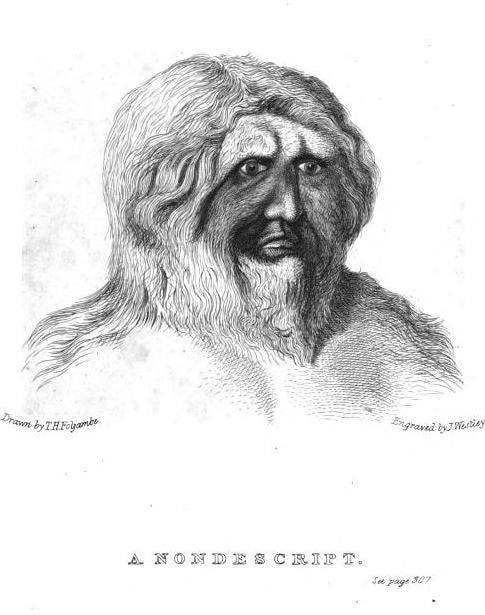
He stated that the beast he discovered, while bearing the face of a man, had a long tail and that he had acquired a specimen, but the creature was far too big to carry, so he only has the torso and head.
Waterton’s monkey man sparked the imagination of the science community, and rumors quickly spread that the Nondescript was a native man that Waterton had shot. Regardless of the manner of how it was obtained, here it is. This is the actual specimen.
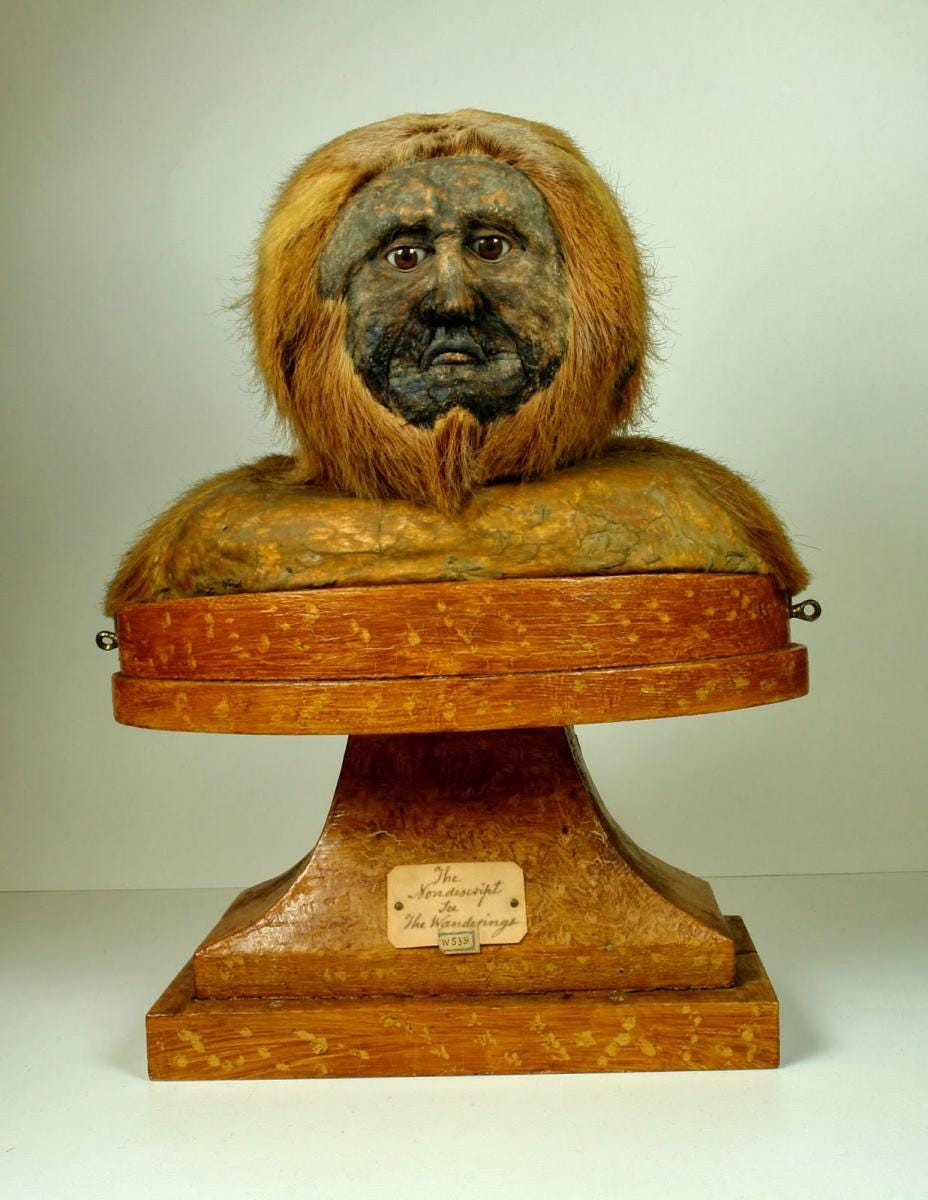
The scientific community was ablaze at the hybrid discovery. This was all the proof that was needed to show that there are other types of humans out there, some of which are half creature, and lord only knows what is lurking in those jungles.
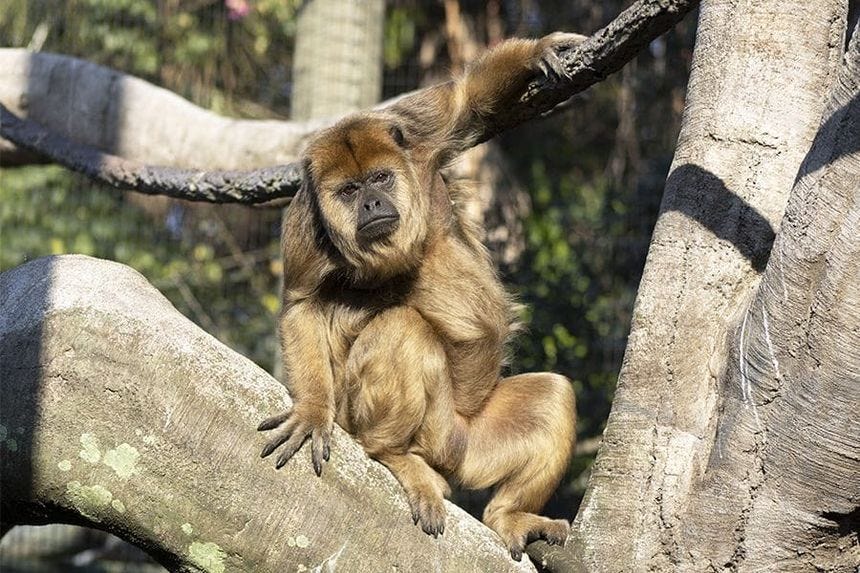
Although the science community was stoked by the discovery, as the specimen began being closely examined, it was found to be an intricate fabrication that was crafted from parts of various animals, primarily the howler monkey, which had been manipulated by the taxidermist to resemble human characteristics.
Although it’s been proven to be a complete hoax, this specimen is still on display at the Wakefield Museum in England, along with other items from Waterton's collection, but the photo of the actual discovery has been omitted from Wikipedia. Why do you suppose that is?
JAVA MAN
Earlier I told you about Java Man, Pithecanthropus erectus. He was the first proof of man evolving from monkey, which was discovered by Dr. Dubois back in 1849.
Well, Dubois, after being sick for some time, admitted on his deathbed that the bones he had claimed to discover nearly a century prior were not legit, but Nature refused to accept his admission. In its February 26, 1938 issue, Nature said that Dr. Dubois' new conclusions about his fossils had been received "with respect, but not with general acceptance; and in the light of the new evidence must be regarded as definitely disproved." This leading scientific journal then asserted, "Pithecanthropus now stands within the line of human descent, if only as a pre-hominoid." Yep, the magazine told the discoverer of the remains to shut the bleep up and doubled down on the fake remains as being proof of evolution.
Professor Wassmann, in his publication, Modern Biology, says the following: “It is nothing short of an outrage upon truth to represent scanty remains, the origin of which is so uncertain as that of Pithecanthropus, as absolute proof of the descent of man from beasts in order to deceive the general public.”
NEBRASKA MAN
This was the next human evolution discovery, which was based on a single molar tooth fragment allegedly discovered in Nebraska. Despite there being such little evidence, this new proof was declared to be “Hesperopithecus.”
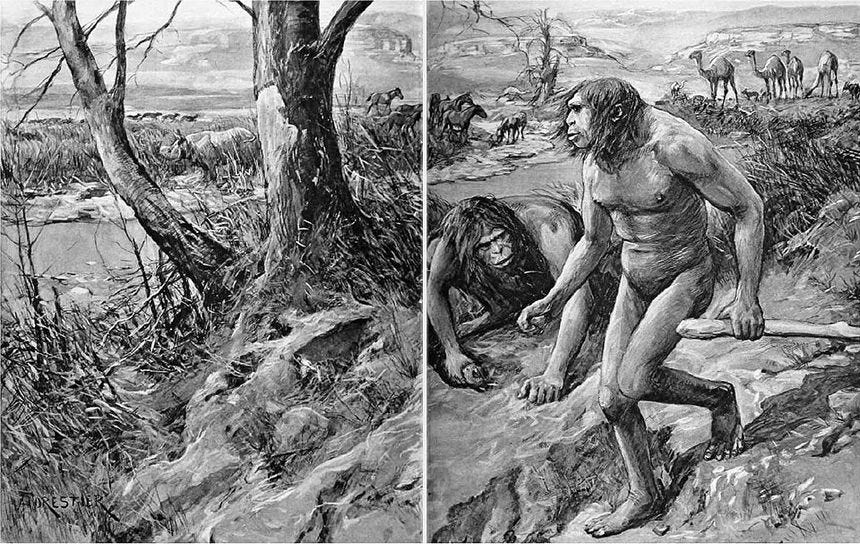
And here’s where this story takes a turn. It was later discovered that the tooth fragment did not belong to a human, an ape, or an ape-human evolution. It instead belonged to a peccary, meaning… a pig.
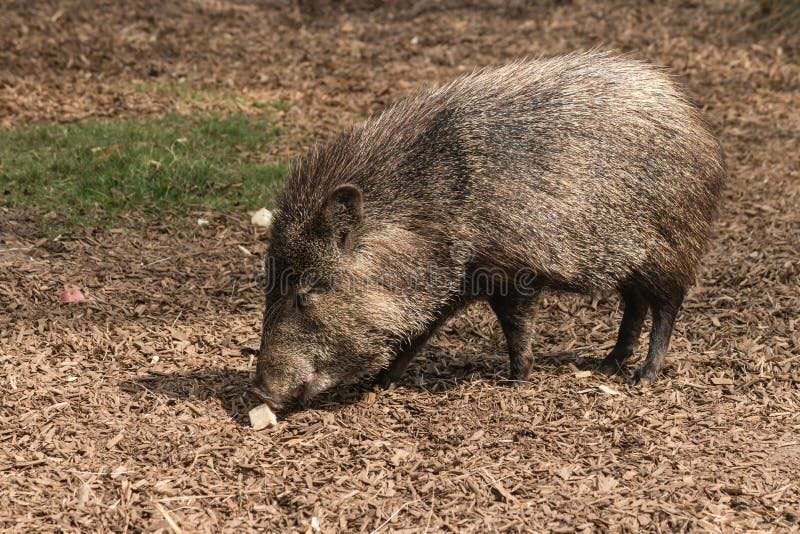
When forced to reveal the truth, Encyclopedia Britannica, to lessen the blow, described the tooth not as belonging to a pig but as "a being of another order."
PILTDOWN MAN
This was the 1912 discovery in which the men who wanted to discover discoveries went digging in the Sussex gravel pit and discovered what science would claim was this guy.
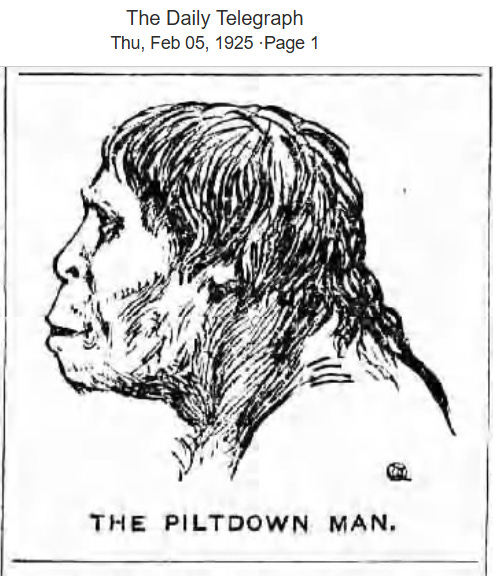
But after decades of Piltdown being the ultimate proof of evolution, the whole house of cards came crashing down.

It turns out that the bone discoveries did not belong to the same being. The skullcap was human, yet the jaw and teeth were from two different species of monkey. Never mentioned in the pile of discoveries was another item that was unearthed: a cricket bat.
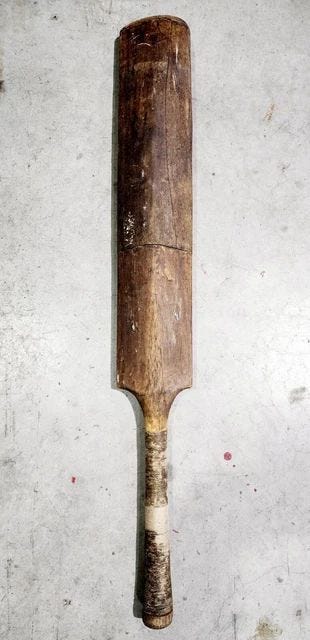
It would further be determined that the skullcap belonged to a complete skull, which had been intentionally busted up so that the entire face was missing. Further, the teeth had been shaved down, and a painted film was applied to them to make them appear older than they were. Worse, all of the pieces had been planted. Tragically, this hoax was outed after 40 years of being printed in media, including high school biology textbooks.
RAMAPITHECUS
Ramapithecus was thought to be a distinct genus that was the first direct ancestor of modern humans (Homo sapiens) when mysterious jawbone fragments were found in Africa. The papers exclaimed that this was the missing link.
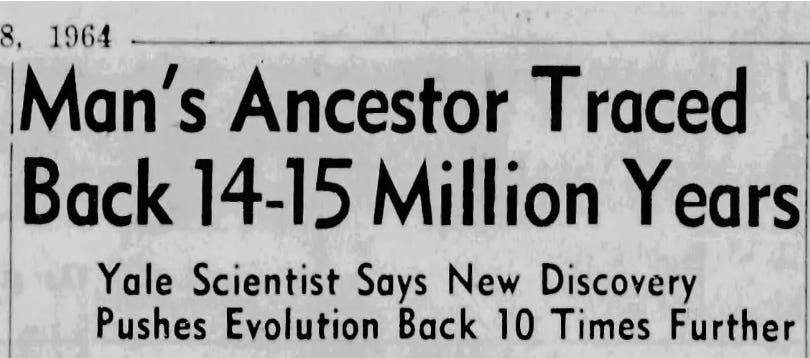
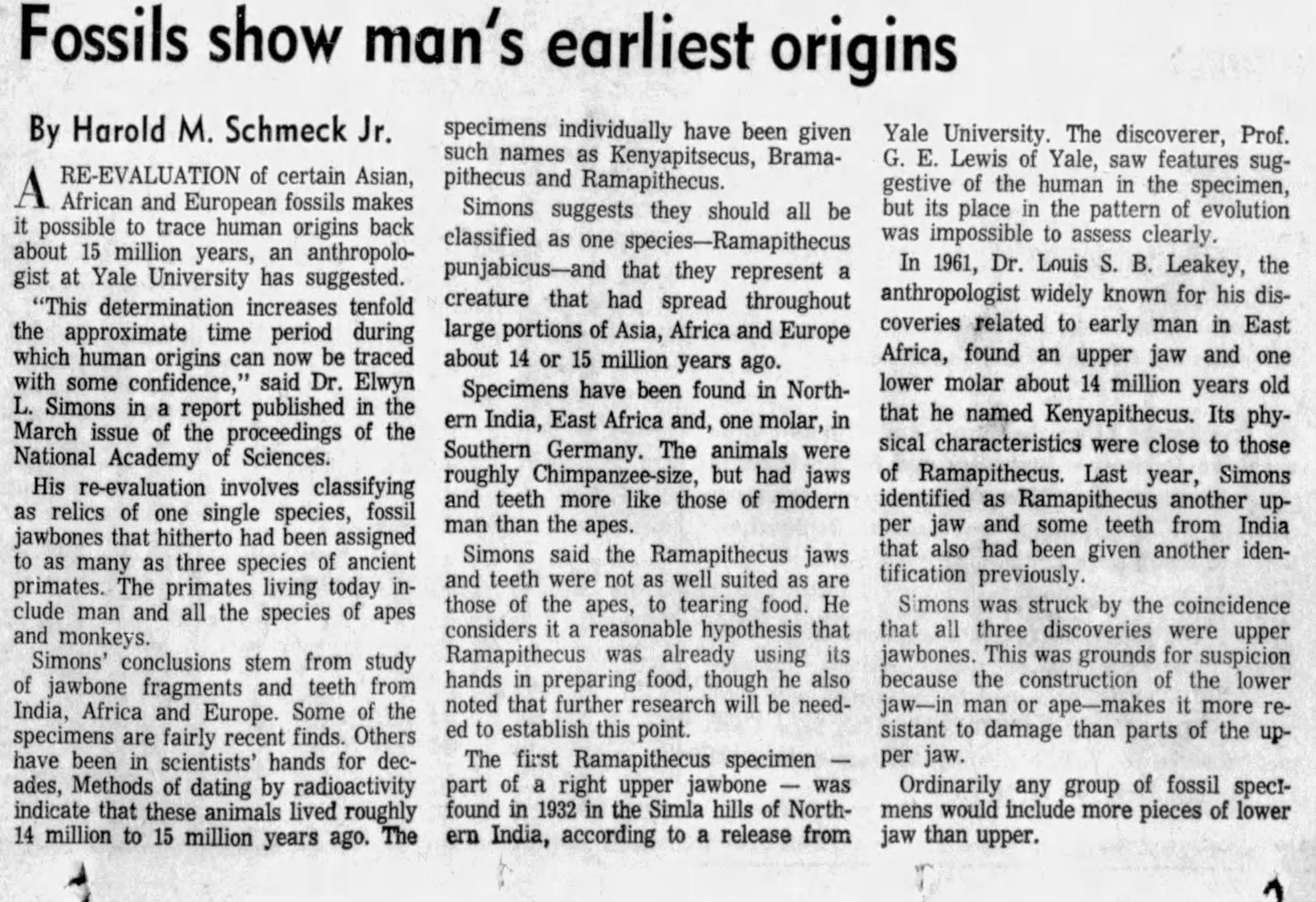
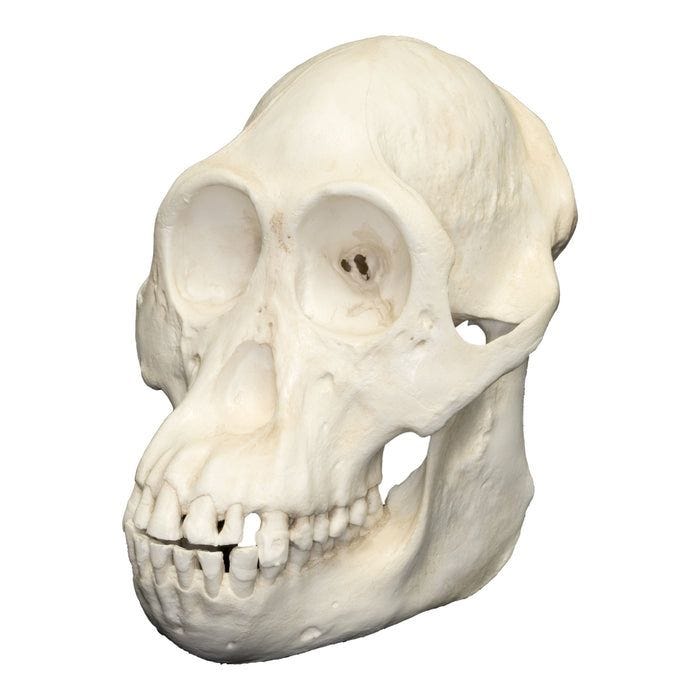
It would later be discovered that the jawbones found in Africa were just parts of an orangutan skull.
Not long after Ramapithecus came the next discovery…
LUCY
The story here is that paleo-anthropologist Donald Johanson stumbled upon a single locking knee joint that matched a type found only in hominids (great apes). Johanson kept digging and, the following year, discovered the now-famous "Lucy" skeleton, Australopithecus afarensis.
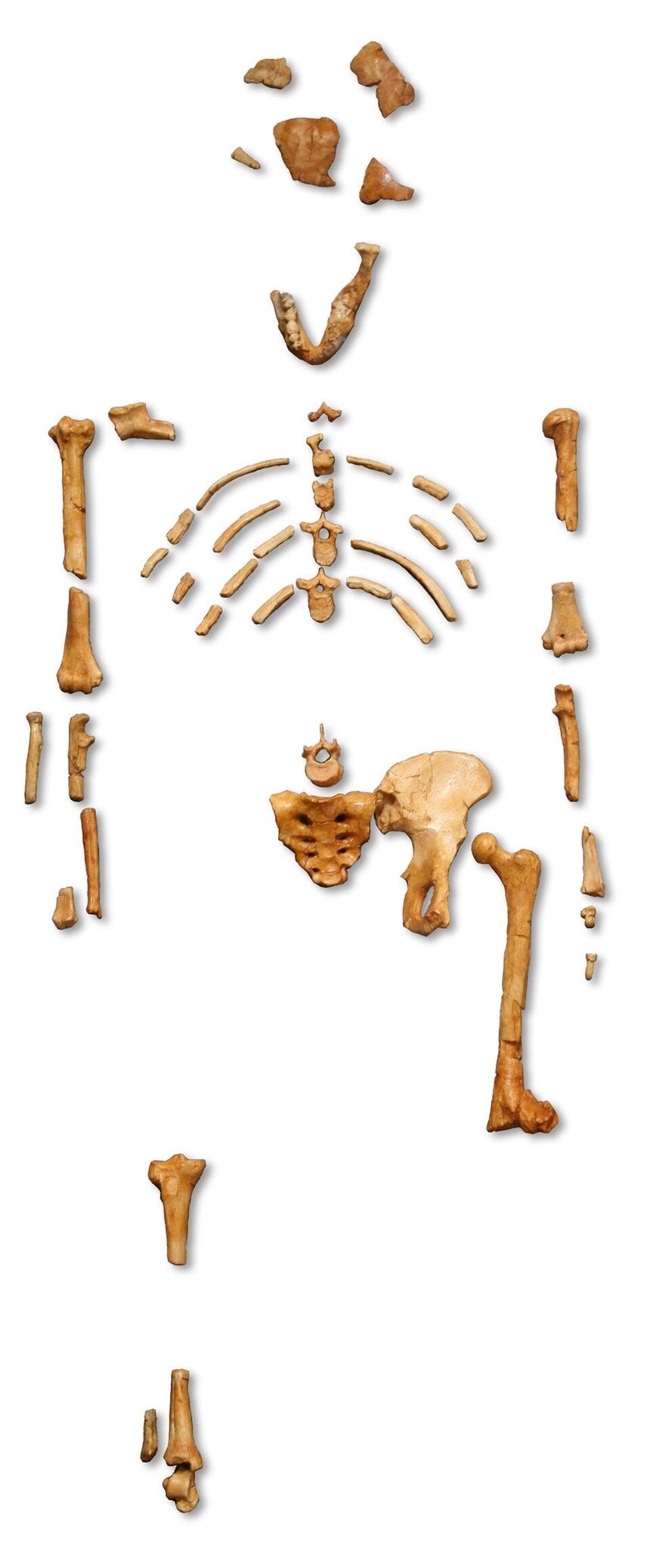
Which scientists and paleontologists claim is this:
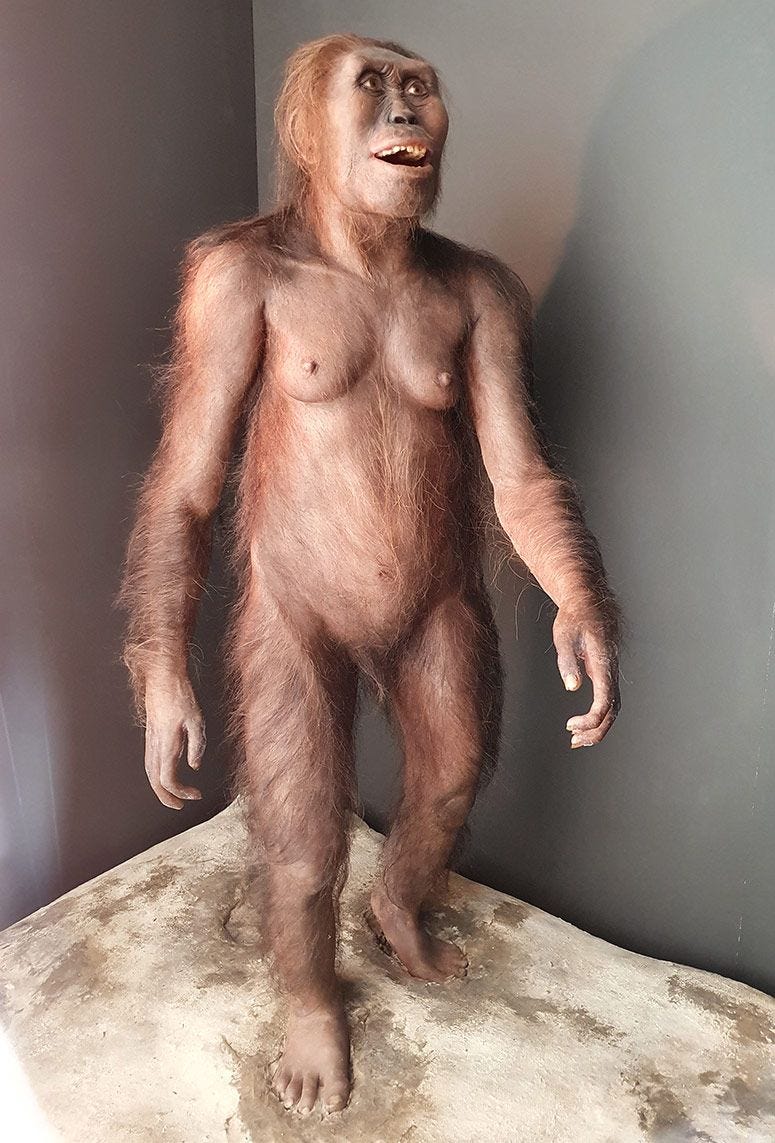
Which obviously, is you and I before we evolved.
Now mind you, Johanson had in fact discovered the locking knee joint prior to his discovery of Lucy, yet these discoveries were determined to be of the same being because, as I have already explained, this is how it works: paleontologists find one fragment in Jamaica in 1918 and another in Antarctica in 1993, and these are parts of the same creature if they say they are. At least in Johanson’s case, it wasn’t as much of a leap of faith, being that, although found in different years, the bones were at least somewhat in the same location, which spanned a mile.
Fast forward to 2015. This was when a team identified one of Lucy’s vertebrae as from a baboon. As other researchers put it, this was “a 40-year-long oversight…. Other non-human bones found in Lucy’s layers show ape qualities, including an adult male and female skull with a spine insertion angle consistent with knuckle-walking apes.” The more the bones were looked at, the more it was discovered not to be an evolutionary stage but to be a mix of bones that were “somehow” lumped together. Oopsie!
Can I tell you guys a story? It’s a personal story, which I typically don’t interject, but I feel it is most appropriate. Because this involves my neighbor, and I live in fear of the day my neighbor discovers I am writing such things about them, the rest of this article is going behind the wall of pay to lessen the odds of being discovered. If you’re listening on audio, you’ll have to scroll down the page and play the second half of the audio. Sorry about that! I just dislike when my online life crosses over into my offline life. So join me on the other side, support truth you haven’t heard elsewhere, and let’s finish demolishing every monkey-man discovery after a juicy story about my neighbor…